 Redefining the
Tactical Edge
Redefining theFrom the first line on the drawing board to a certified aircraft on the ramp, SAI can plan and perform every critical engineering discipline in-house — the model of a focused Skunk Works applied to heavy aircraft.
Original aircraft design, structural and aerodynamic analysis, and full systems integration. Our engineers carry a "whole-aircraft" understanding — every change is evaluated against the complete platform, not in isolation.
Major airframe rework, fuselage and wing modification, and structural life extension that returns proven airframes to decades of additional certified service.
High-lift devices, wing and control-surface refinement, and configuration work that expand short-field performance, range, and payload.
Modern engines and next-generation propellers integrated with new generators and control systems for greater power, efficiency, and dispatch reliability.
Replacement of legacy analog flight stations with modern, two-crew glass cockpits — improving situational awareness, safety, and crew workload.
Rapid prototyping and company flight-test aircraft let us prove modifications in the air before they reach a customer's fleet.
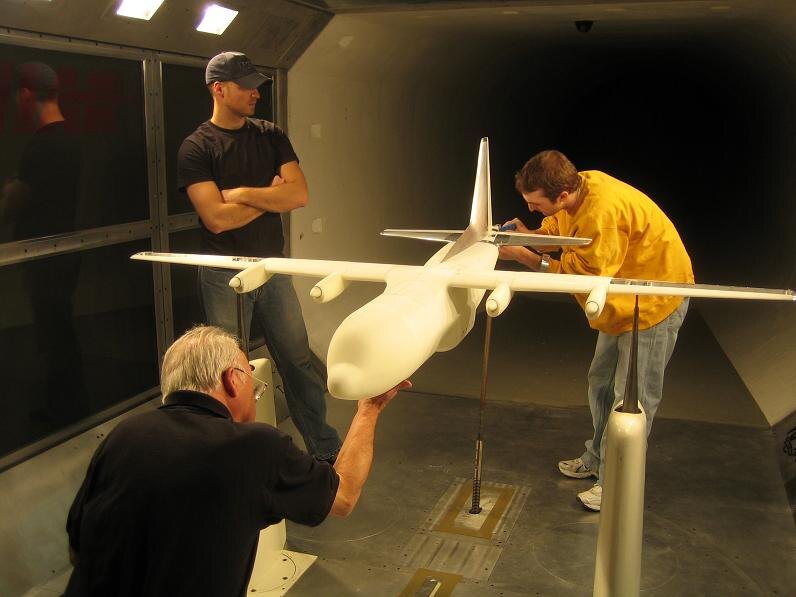 STOL Herk · Wind-Tunnel Validation
SAI's STOL configurations are validated in the wind tunnel before a single part is cut. Aerodynamic data drives the design — so the performance we promise on paper is the performance the aircraft delivers in the air.
The C-130 is among the most capable airlifters ever built. What dates it isn't the airframe — it's the systems. SAI rebuilds the cockpit, propulsion, and structure around the platform operators already trust.
A new C-130J runs well over $97 million per aircraft. SAI delivers comparable capability — range, payload, avionics, and decades of added service life — by modernizing the proven airframes operators already own, at a fraction of the cost.
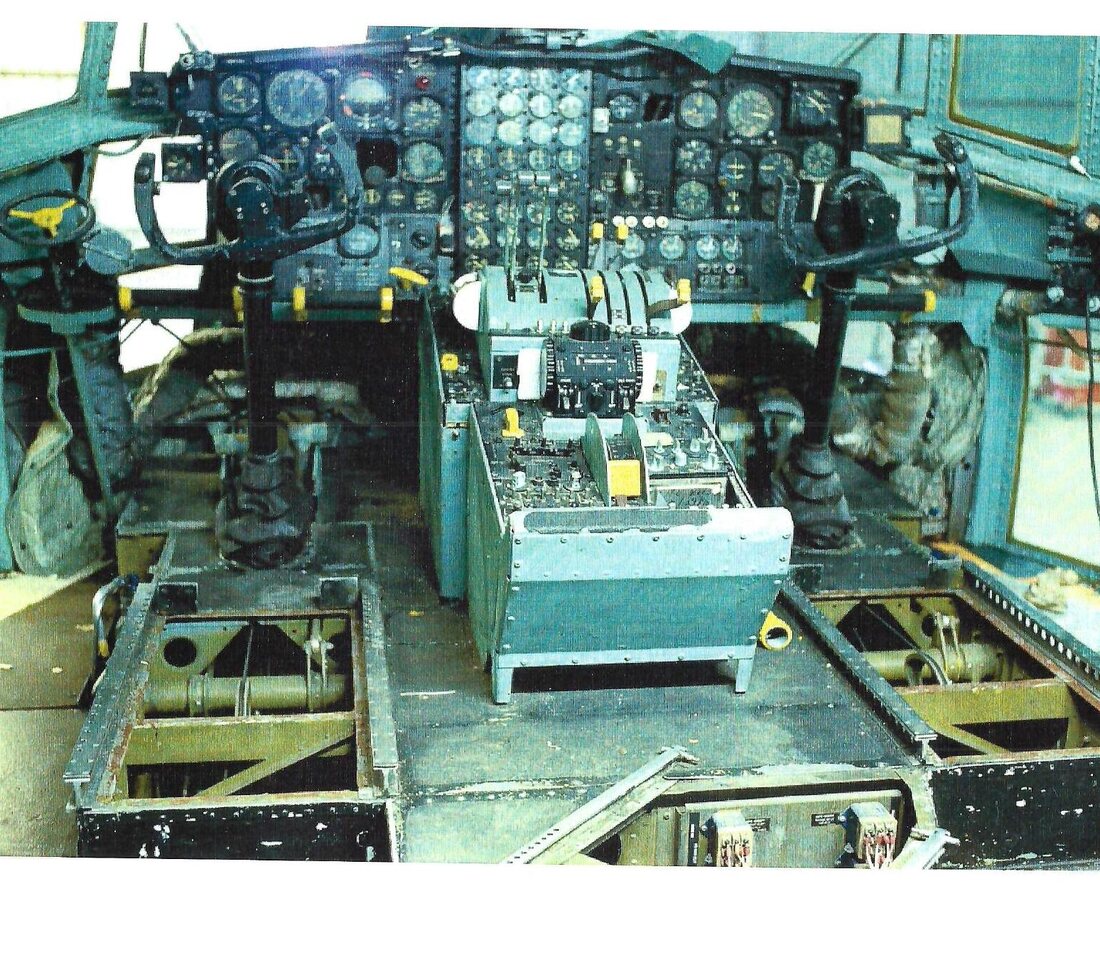 Baseline analog flight station
Certification is where many modification programs stall. It's where SAI is strongest. SAI's founding engineer personally managed more than 35 FAA certifications across a variety of aircraft — so a modification doesn't just work on paper, it flies, and it's approved to carry the mission.
SAI's C-130 modifications aren't concepts — they're backed by FAA Supplemental Type Certificates. That certified pedigree is the difference between a slide and an aircraft cleared to fly the mission.
The flagship certificate — a re-architected C-130 electrical power generation, control, and distribution system. FAA-certified under type certificate TQ3CH.
Eight-blade composite propellers integrated on the C-130 for greater thrust, lower vibration, and simplified maintenance over the legacy four-blade system.
SAI's non-drag-inducing wing tip tank — roughly 512 gallons per side of additional fuel — extending range without the drag penalty of conventional external tanks.
A modern two-crew glass flight deck with engine-indication and crew-alerting systems, replacing the legacy analog instrument panel.
Lighter, longer-life carbon brakes that improve stopping performance and reduce maintenance burden on demanding, short-field operations.
An integrated short take-off and landing configuration — high-lift aerodynamics and propulsion working together to reach fields the standard aircraft can't.
Beyond the flagship certified mods, SAI has engineered a deep catalog of C-130 and L-100 upgrades — selected and combined to fit each operator's mission.
The T56-A-15, Series 3.5 upgrade gives older C-130B/E/H operators more power, capability, and dispatch reliability from the engines they already understand.
Redesigned forward and aft nacelle and engine-mount structures cut load concentration at the wing front spar by roughly 50%.
A flight-tested dual-battery system that meets FAA and U.S. military emergency-power and service-time requirements in the event of a generation failure.
Gas-turbine-compressor and air-turbine-motor upgrades for reliable on-ground electrical power without running the aircraft's main engines.
A C-130E/H and L-100 fuselage stretch that increases cargo volume for operators who need more cubic payload from the same platform.
A redesigned lightning dissipation and protection system that hardens the modernized aircraft against strike damage.
Range, payload, avionics, service life — tell us the gap, and we'll scope the engineering to close it.
Request a Briefing →